Trezor Login: A Step-by-Step Guide to Secure Cryptocurrency Access
As cryptocurrencies become an essential part of modern finance, ensuring the safety of digital assets is critical. Trezor, one of the leading hardware wallets, provides a highly secure solution for storing and managing cryptocurrencies offline. At the core of using Trezor safely is the login process, which protects your funds and ensures that only authorized users can perform transactions.
This guide explains the Trezor login process in detail, covers security features, troubleshooting tips, and best practices for keeping your crypto secure.
What Is Trezor?
Trezor is a hardware wallet developed by SatoshiLabs designed to keep private keys offline. Unlike software or web wallets, Trezor wallets prevent hackers from accessing your assets directly, because all sensitive operations are performed on the device itself.
Trezor wallets work with desktop and mobile devices and are primarily managed through Trezor Suite, the official companion application. Key features of Trezor include:
Secure storage for multiple cryptocurrencies
Sending and receiving digital assets
Managing multiple wallets and accounts
Backup and recovery using a recovery phrase
Advanced functions like staking, token swaps, and portfolio monitoring
The login process is the first step to secure access, making it a critical part of your crypto security.
Why Trezor Login Is Important
Logging in to Trezor is not just about opening the app; it is a secure authentication gateway. The wallet requires physical confirmation for all major actions, preventing unauthorized access even if your computer is compromised.
Benefits of Trezor login include:
Offline Security: Private keys never leave the device.
PIN Protection: Prevents unauthorized access to the wallet.
Transaction Verification: All transactions are approved on the hardware device.
Recovery Assurance: Wallets can be restored with the recovery phrase in case of device loss.
By combining multiple layers of protection, Trezor significantly reduces the risk of theft or fraud.
Trezor Wallet Models
Trezor offers multiple hardware models with slightly different login procedures:
Trezor Model One – Entry-level wallet with essential features.
Trezor Model T – Premium model with a touchscreen, expanded cryptocurrency support, and advanced security options.
Trezor Suite – The desktop and mobile software used to interact with Trezor devices.
The login experience may vary slightly depending on your hardware model.
How to Log in to Trezor
Logging in to a Trezor wallet involves several steps designed for maximum security.
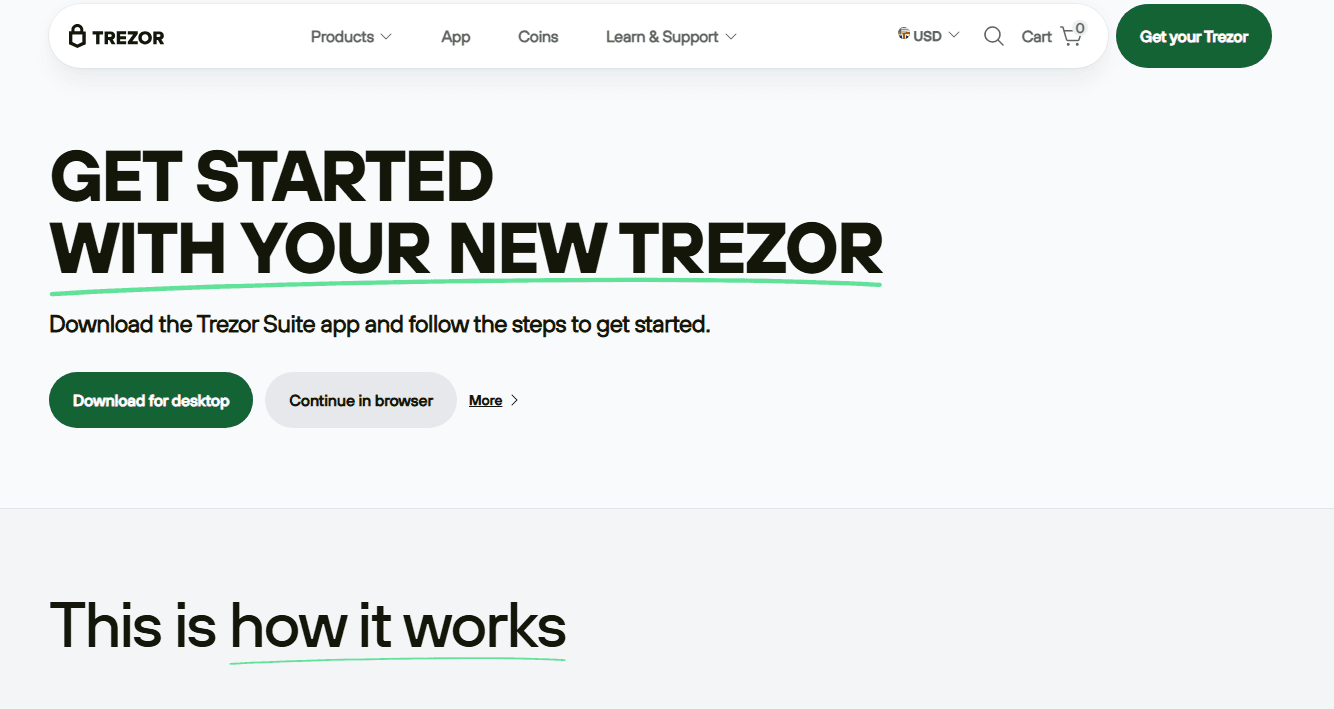
Step 1: Install Trezor Suite
Trezor Suite is the official software for interacting with your hardware wallet:
Go to Trezor’s official website.
Download the version compatible with your operating system (Windows, macOS, Linux, or mobile).
Follow the installation instructions provided.
Security Tip: Always download Trezor Suite from the official website to avoid malware or phishing risks.
Step 2: Connect Your Trezor Device
Plug your Trezor into your computer or mobile device using the supplied USB cable.
Power on the device; some models like the Trezor Model T use a touchscreen.
Trezor Suite will detect the device automatically.
This ensures that only the physical hardware can authenticate login.
Step 3: Enter Your PIN
Your Trezor device requires a PIN for security:
A randomized on-screen keypad is displayed on the device to prevent keylogging attacks.
Enter the PIN directly on the Trezor device.
Confirm the PIN to unlock access.
This step prevents unauthorized access even if your computer is compromised.
Step 4: Optional Passphrase
Trezor offers an optional passphrase feature for an extra layer of protection:
The passphrase acts as a “hidden wallet” not visible without it.
Enter the passphrase to unlock additional wallets derived from your recovery phrase.
Each passphrase creates a unique wallet.
Important: Losing a passphrase results in permanent loss of access to that hidden wallet. Always store passphrases securely offline.
Step 5: Access Your Accounts
Once authenticated, Trezor Suite provides full access to your wallets:
View balances and transaction history
Send and receive cryptocurrencies
Manage multiple accounts or wallets
Monitor portfolio performance
Access advanced features such as staking and token swaps
All transactions must be confirmed physically on the Trezor device, ensuring complete security.
Security Features of Trezor Login
Trezor login incorporates multiple layers of protection:
Hardware Verification: Transactions must be approved on the device itself.
PIN Protection: Guards against unauthorized access. Multiple incorrect attempts trigger a factory reset.
Optional Passphrase: Adds additional security and allows hidden wallets.
Recovery Phrase Backup: Ensures wallet recovery in case of loss or theft.
Transaction Signing on Device: Private keys never leave the hardware, protecting against malware or phishing.
These features collectively make Trezor one of the most secure cryptocurrency wallets available.
Common Trezor Login Issues
Even with robust security, users may encounter login problems. Here are common issues and solutions:
1. Device Not Recognized
Cause: Connection issues or outdated Trezor Suite.
Solution: Try a different USB port or cable, reconnect the device, or update the Suite.
2. Forgotten PIN
Cause: The PIN is forgotten.
Solution: Multiple incorrect attempts will reset the device. Restore the wallet using the recovery phrase.
3. Lost Passphrase
Cause: Optional passphrase is forgotten.
Solution: Hidden wallet access is lost permanently. Only the main wallet remains accessible.
4. Transaction Not Confirmed
Cause: Transaction not approved on the device or outdated firmware.
Solution: Reconnect the device, update firmware and Suite, and confirm on the device.
Best Practices for Trezor Login Security
To ensure maximum security:
Always download Trezor Suite from the official website.
Use a strong, unique PIN and consider enabling an optional passphrase.
Keep device firmware updated.
Never store recovery phrases digitally or share them online.
Confirm every transaction on the hardware device.
Use hidden wallets for added security if managing significant funds.
Monitor Trezor Suite for software updates and security notifications.
Desktop vs Mobile Login
Trezor can be accessed on both desktop and mobile devices:
Desktop: Best for detailed portfolio tracking, managing multiple wallets, and advanced features.
Mobile: Convenient for on-the-go access, often using USB-C or OTG connections.
Both maintain the same security protocols, with private keys always remaining offline.
Advanced Features After Login
Once logged in, Trezor Suite offers several advanced features:
Staking: Earn rewards on supported cryptocurrencies.
Token Swaps: Swap one cryptocurrency for another securely within the app.
Portfolio Analytics: Track performance, growth, and asset allocation.
Hidden Wallets: Access wallets created using optional passphrases.
These features make Trezor a complete cryptocurrency management solution.
Troubleshooting Tips for Smooth Login
Ensure USB cables or OTG connections are working.
Restart Trezor Suite and reconnect the device.
Update Suite and firmware regularly.
Clear cache if unexpected behavior occurs.
Contact Trezor support if issues persist.
Conclusion
Trezor login is the cornerstone of secure cryptocurrency management. By combining hardware verification, PIN protection, optional passphrases, and recovery phrase backups, Trezor ensures that your funds remain safe from hackers and malware.
Understanding the login process, following best practices, and addressing common issues allows both beginners and advanced users to manage, send, receive, stake, and monitor cryptocurrencies confidently.
Trezor is not just a wallet—it is a secure gateway to the world of digital assets.